A failing water pump doesn’t always announce itself with a temperature warning or steam coming from under the hood. In many cases, the cooling system gives you smaller clues first. A faint coolant smell after parking, a new noise near the belt drive, or a reservoir that needs topping off more than once can all show up before the engine actually runs hot.
The water pump has a simple job, but the engine depends on it constantly. It keeps coolant moving through the engine, radiator, and heater circuit so it can carry heat away. When the pump starts leaking, develops bearing play, or loses its ability to circulate coolant properly, the first symptoms can be easy to overlook.
1. Coolant Is Seeping Near the Front or Side of the Engine
Many water pumps have a small opening called a weep hole. If the internal seal begins to fail, coolant can start escaping there. Early on, the leak may be too small to leave a puddle.
We often find dried coolant residue before we find active dripping. Depending on the coolant type, it may leave a white, pink, orange, blue, or crusty-looking trail around the pump housing or nearby engine parts. You might also smell coolant after shutting the vehicle off, especially once the engine is fully warm.
A small leak shouldn’t be treated as normal coolant loss. If the reservoir level keeps dropping, the system needs an inspection to find where the coolant is going.
2. You Hear Grinding, Growling, or Chirping Near the Belt
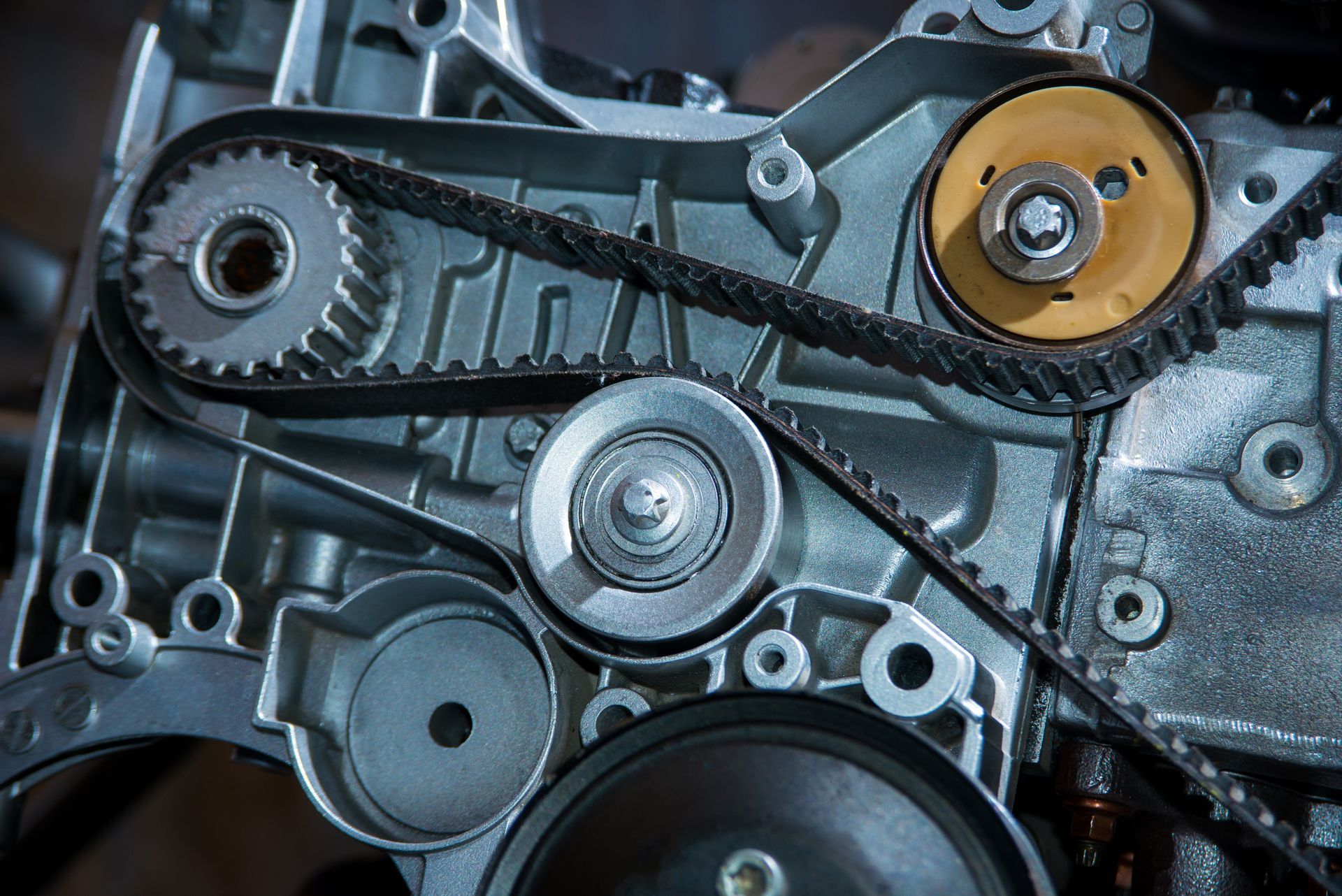
On many engines, the serpentine or timing belt drives the water pump. The pump shaft spins on a bearing, and that bearing can wear before the pump stops moving coolant.
A failing bearing may create a growl, rumble, grinding sound, or repetitive chirp from the front of the engine. The sound can change with engine speed. Sometimes it’s easiest to hear right after startup, while other pumps become noisier once everything has warmed up.
Noise in that area doesn’t automatically mean the water pump is bad. Idler pulleys, belt tensioners, alternators, A/C compressors, and other belt-driven parts can sound very similar. At our shop, we want to isolate the source rather than replace the part closest to the noise.
3. The Water Pump Pulley Has Play or Wobbles
A worn water pump bearing can allow the shaft and pulley to move more than they should. That movement may show up as a wobble while the engine is running, or it may only become obvious when you remove the belt and check the pulley by hand.
This kind of wear deserves attention because the problem isn’t limited to coolant circulation. A loose pump can throw the belt out of alignment, damage the seal, or eventually allow the pulley to move badly enough that the belt comes off.
A pulley that looks fine while sitting still isn’t proof that the bearing is healthy. Some wear only becomes apparent once the component is loaded and spinning.
4. The Heater Temperature Changes While You Drive
Your cabin heater depends on hot coolant flowing through the heater core. If coolant circulation becomes weak or inconsistent, the air from the vents can change temperature even though you haven’t adjusted the climate controls.
For example, the heater may blow hot air while driving and turn cooler at idle. You might also notice the opposite pattern if air is entering the cooling system because of a leak. Low coolant, a restricted heater core, thermostat trouble, and cooling system air pockets can create similar symptoms, so heater performance alone doesn’t prove the pump has failed.
Still, changing cabin heat paired with coolant loss or rising engine temperature gives us a reason to take circulation problems seriously.
5. The Temperature Gauge Starts Moving More Than It Used To
A healthy cooling system should keep engine temperature within a fairly narrow operating range. If the gauge begins creeping higher in traffic, climbing on hills, or dropping again once road speed increases, something in the cooling system is no longer keeping up.
A weak water pump is one possibility, especially if the impeller is damaged or loose on the shaft. But cooling fans, thermostats, radiators, low coolant, trapped air, and head gasket problems can produce similar patterns.
Don’t wait for the gauge to reach the red zone before having it checked. If the temperature suddenly climbs, the heater goes cold, or a warning message appears, continuing to drive can turn a cooling system repair into engine damage.
How We Confirm a Water Pump Problem
Water pump diagnosis should include the rest of the cooling system. We check coolant level and condition, look for leaks and dried residue, inspect the belt drive, verify cooling fan operation, and monitor engine temperature as the vehicle warms up.
Pressure testing can reveal leaks that don’t show while the engine is cold. On some vehicles, the pump is difficult to see without removing covers or other components. Regular maintenance also gives us a chance to catch slow leaks and belt-drive wear before overheating starts.
Get Water Pump Repair In Houston, TX, With Elite Auto Experts
If you’ve noticed coolant loss, unusual belt-area noise, changing heater output, or a temperature gauge that no longer stays steady, Elite Auto Experts in Houston, TX, can check the water pump and the rest of the cooling system before overheating becomes the next symptom.